
Craft Works
The LCBO is shining a spotlight on homegrown Ontario wine

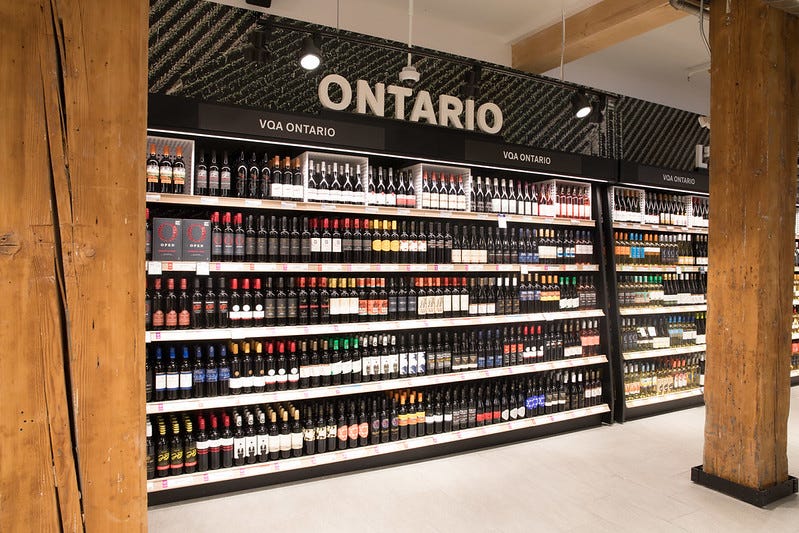
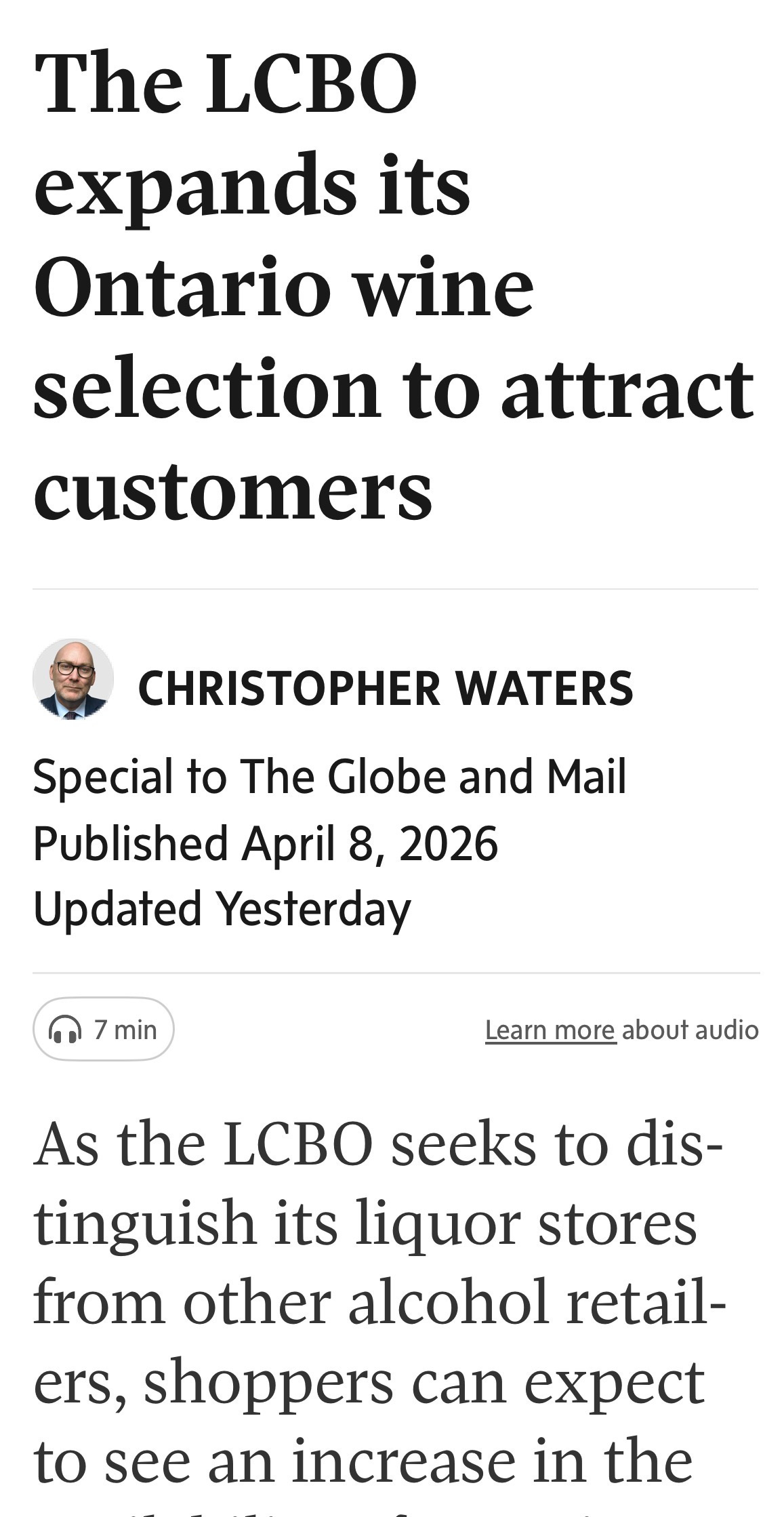
Since the LCBO stopped selling American products over a year ago, Ontario wines have become so popular with consumers that the provincial liquor retailer now emphasizes local wine as a unique selling point.
Figures shared at the Ontario Craft Wineries’ 2026 Spring Wine Forum on March 31 reveal sales of VQA wines increased by 63 per cent over the past year. The biggest gains were seen in chardonnay and pinot grigio, followed by cabernet merlot blends and baco noir.
VQA, short for Vintners Quality Alliance, serves as the regulatory authority and quality assurance system for Ontario wines. (Additionally, LCBO sales figures indicated overall liquor sales in Ontario remained flat during the same time period.)
“We are fully committed to the expansion of VQA shelf space,” Aaron Campbell, the LCBO’s newly appointed interim president and CEO, told members of Ontario grape and wine industry gathered at the forum.
Campbell explained that Ontario craft wine is responsible for increased traffic and sales at LCBO stores.
His passionate presentation made it clear that the LCBO considers the local wine industry an important part of Ontario’s economy and culture. This is especially true given their evolving role as a liquor retailer in the face of increased competition from grocery and convenience stores.
This presentation had a completely different vibe than ones by former executives, including Andrew Brandt and Philip Olsson. Their attitude often suggested that members of Ontario’s grape and wine industry should be grateful the board showed any interest at all. “Shop the World” was the core directive of the day as the LCBO trumpeted its vast global product assortment to Ontario consumers while generating significant revenue for the Ontario government’s coffers.
You can read more about Campbell’s comments about the LCBO shifting focus and role in Ontario’s modernized alcohol market in this week’s Globe and Mail column. The headline is one that I never expected to write in my nearly 30 years reporting on Ontario wine. Here’s a gift link.
Saturday Sip
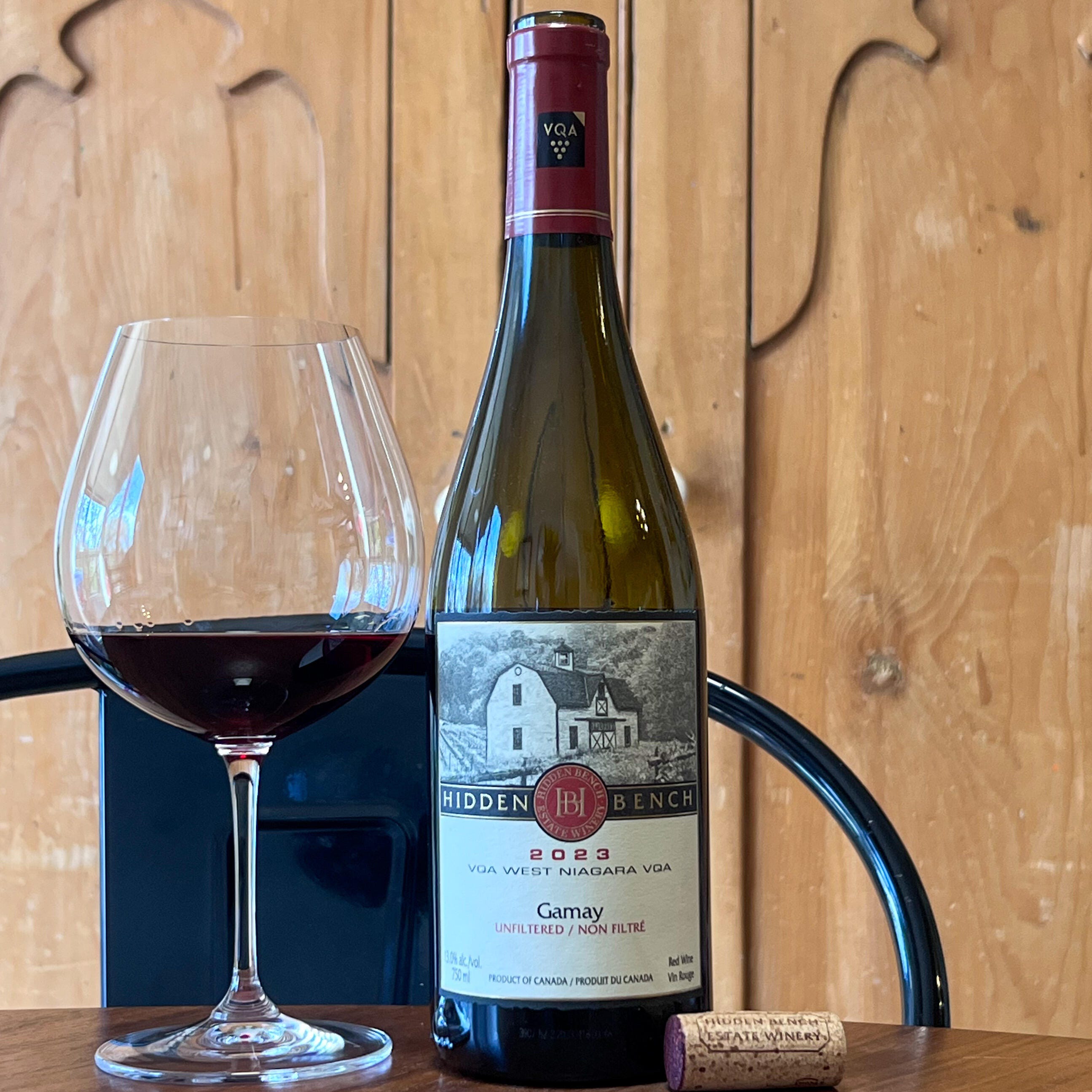
Hidden Bench Gamay Unfiltered 2023
West Niagara, Niagara Peninsula $29.95 (20422)
Produced with gamay grapes from organic estate vineyards in the Beamsville Bench and Lincoln Lakeshore appellations, this wine was fermented with 16 per cent whole clusters. It was aged for nine months in French oak, a mix of new (10 per cent) and older barrels. After being blended, it was aged for an additional nine months in stainless steel before being bottled unfined and unfiltered April 10, 2025.
This expressive red wine features sweet ripe fruit flavours of blackberry, raspberry, cherry along with white pepper and savoury notes. While it’s currently tasty and ready to drink, this wine is sure to mature nicely in the short term. It will offer more integration and complexity, ultimately providing a greater return on your investment. To provide a comparison, I opened Hidden Bench’s inaugural gamay and found it to be developing gracefully. This has 13 per cent ABV and 2 g/litre r.s. Drink now to 2031. Available at the above price in Ontario (LCBO Vintages April 11 release) or direct, hiddenbench.com (91/100)
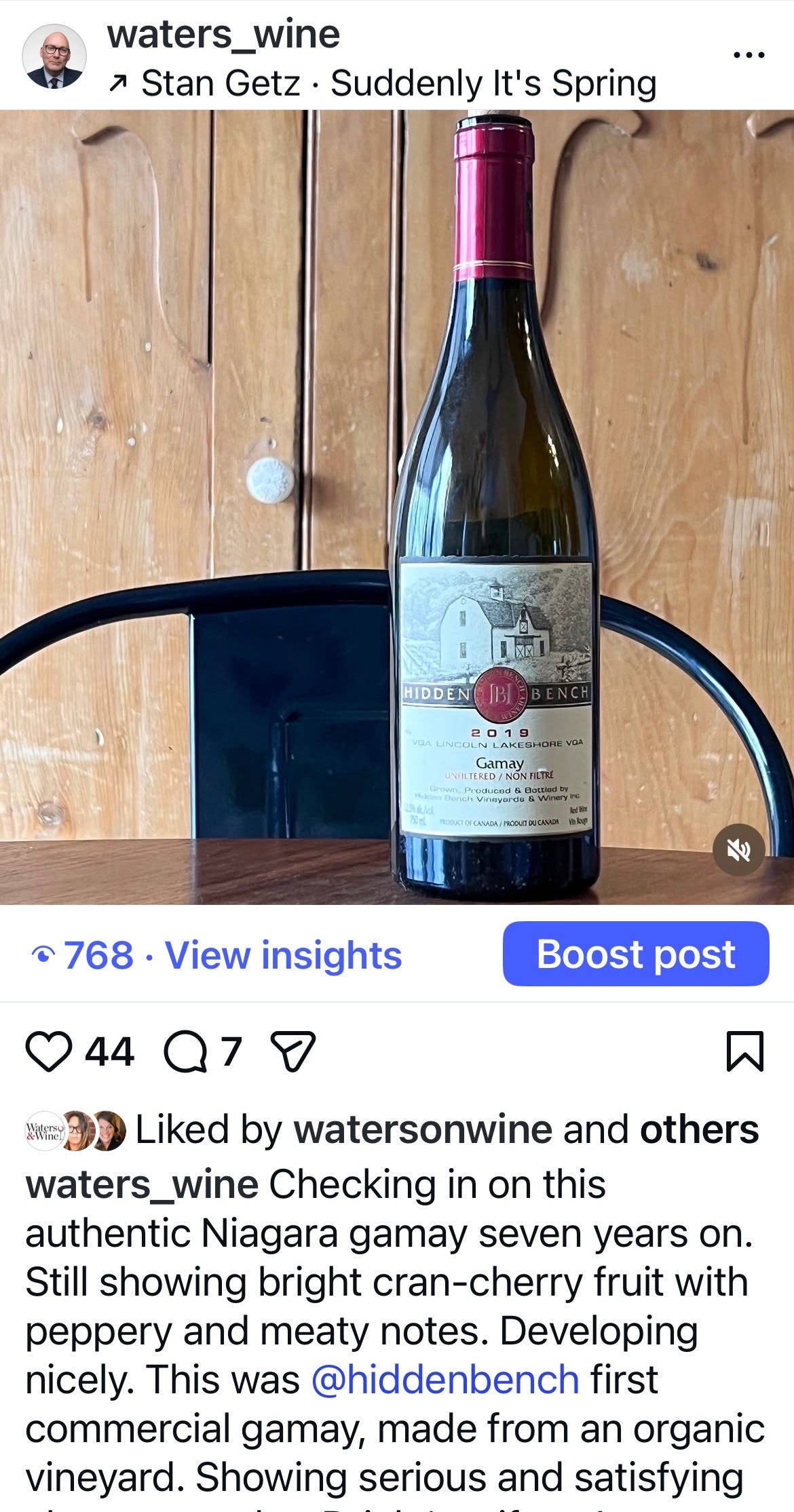
Checking in on this authentic Niagara gamay seven years on. Still showing bright cran-cherry fruit with peppery and meaty notes. Developing nicely. This was @hiddenbench first commercial gamay, made from an organic vineyard. Showing serious and satisfying character today. Drink ‘em if you’ve got ‘em.
If I Had Your Number…
Here are some links I would share with you.
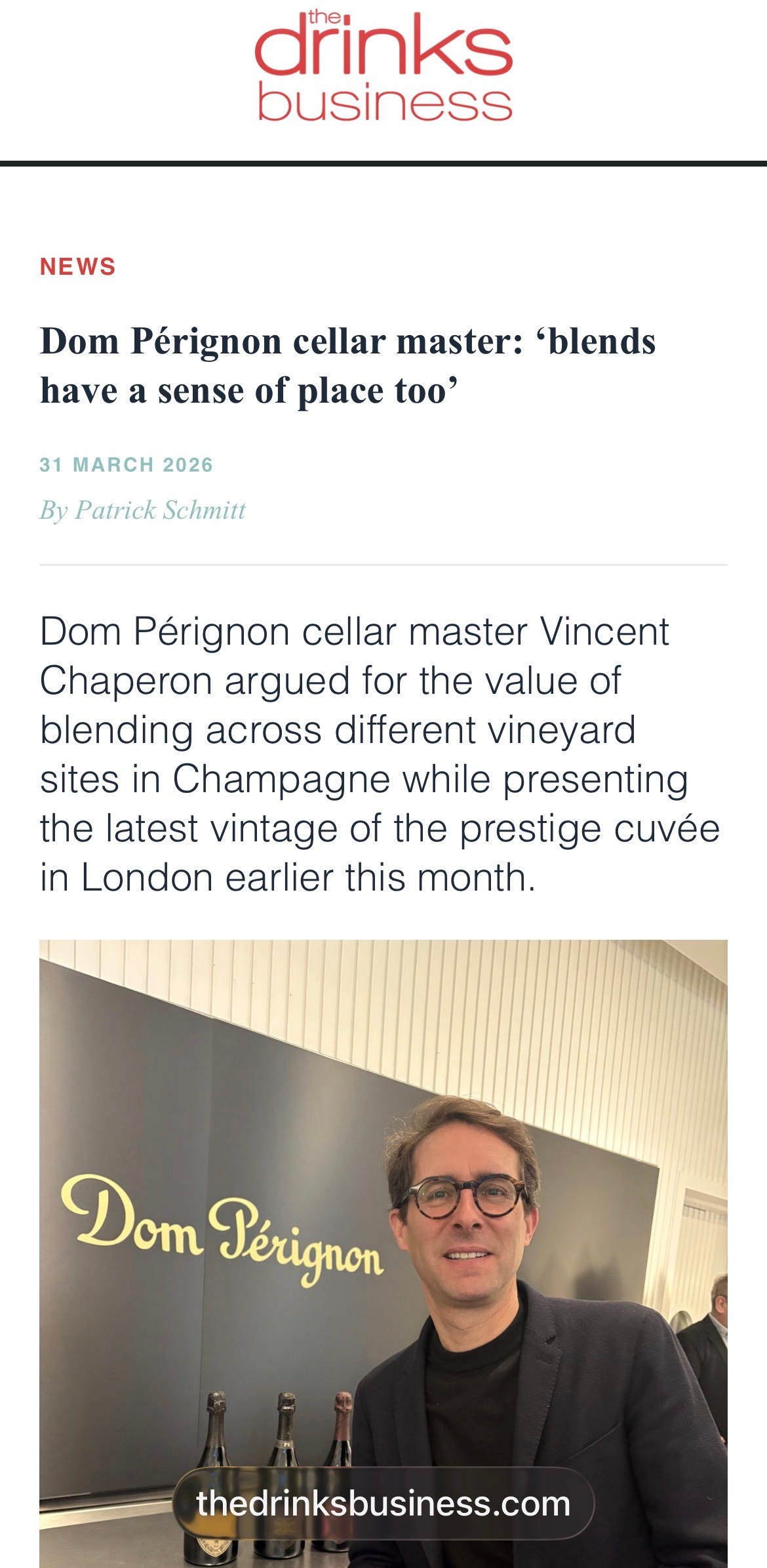
Before showing the latest release of Dom Pérignon – which hails from the 2017 harvest – he was asked about the recently-completed 2025 vintage. Ahead of giving his opinion, Chaperon described the challenge of assembling wines that are still young but intended for long ageing. “We have just finished the blend of 2025 in advance of most of our colleagues because we like to go fast, which is not easy as we are tasting wines that are quite tight, but we think that going fast is good for quality,” he said. Dom Pérignon’s white and rosé Champagnes from the 2025 harvest were blended in the first week of March.
Then he expressed his delight with the vintage overall. “In 2025, mother nature gave us a fantastic playground,” he said, referring to the range of high-quality base wines available. The harvest was notable for its quality despite limited yields, which, as previously reported by db, were capped at 9,000kg/ha – the equivalent of 255-258 million bottles – when 10,000-12,000kg/ha is the norm.
Chaperon spent particular time discussing blending itself. Reflecting on the legacy of Dom Pierre Pérignon – the French Benedictine monk who made such an enormous contribution to the development of the Champagne making process – he said, “The more I study Dom Pierre Pérignon… the more I realise that it was he who really invented the blend.” He linked this idea to monastic practice: “The art of living as a Benedictine monk was to elevate each person through a collective approach, and I think it was the same with blending grapes: to elevate the soul of each place through the act of assembling.”
He described blending across different sites as a defining tension in Champagne. While the growing prominence of individual growers has strengthened the discussion of terroir, he maintained that blending can also express origin. “In a blend, you can have a sense of place too,” he said.
Jamie Goode: Do wine experts taste better or simply differently? (April 2, 2026, winemag.co.za)
When it comes to wine, I express my opinion to my geeky audience quite freely. For 19 years I had a national tabloid newspaper column, where I was speaking to a different audience, and I recommended quite different wines. This wasn’t a patronising move, just a recognition that some consumers are at a different stage in their exploration of wine, and that many simply want something that tastes nice at a decent price, and that’s all for them.
I know that not everyone has the same engagement with wine that I do. I also recognize that even high involvement consumers might like different styles of wine to the ones I prefer. This is not a complicated stance to take. If you like the same sort of wine aesthetic to me, read my work and take my recommendations. If your taste differs significantly and you don’t find me a reliable guide, then follow someone else.
But we are in deep trouble if we don’t express our opinions, and instead try to guess the tastes of the majority, and tailor our recommendations to what we feel is mass taste. This is different to what I was doing in my column for the newspaper. There, I recommended what I thought were the best wines from the major retailers at an affordable price point. I didn’t think: most normal people like sweetness in their red wines, therefore I am going to recommend the sweeter red wines with added sugar because this is what I think they’ll like. There’s a difference in approach here.
If you are enjoying what you are reading, please comment, like, share and subscribe. If you find the information valuable, please consider a paid subscription. Thank you.
I think Jamie’s on to something; especially because I agree with him. You don’t have the same conversation with your boss as you do your friends, neither bad nor good, only different… the conversation between wine pros (and even within the level of “pro”) and those who just like to drink it (thank god for them) is entirely different. And it should be.